

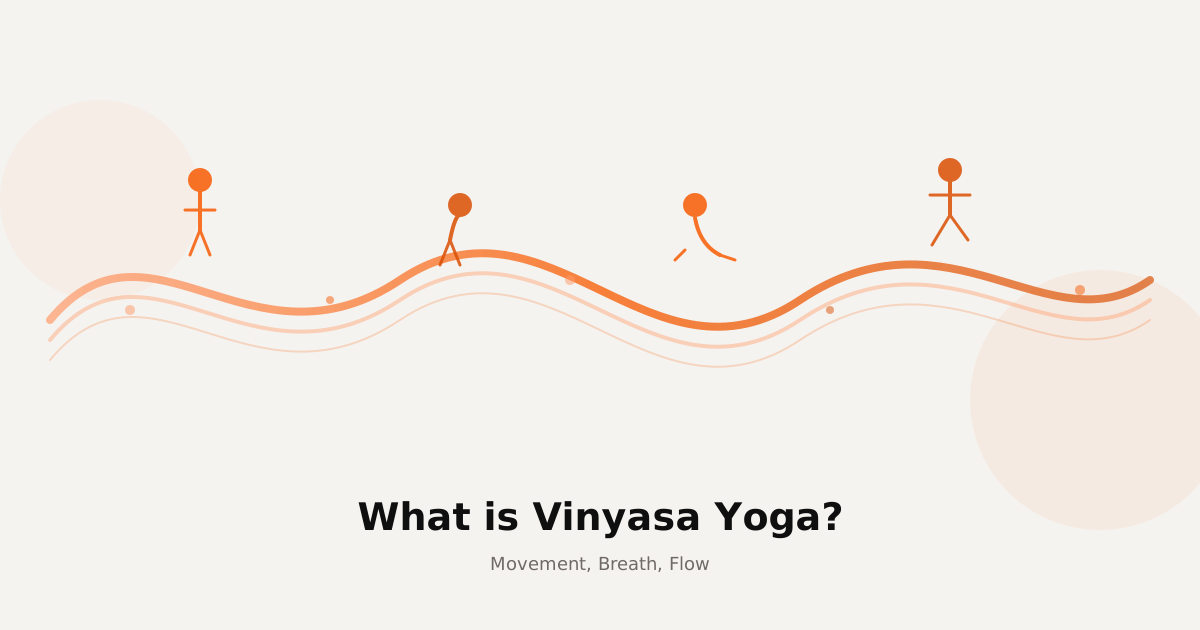
Vinyasa yoga connects movement and breathing through sequences, often described as flow. It can be gentle or demanding, and the order of postures varies between teachers and classes. The word Vinyasa alone therefore does not tell you whether a session suits beginners.
This guide helps you read class descriptions, find an appropriate pace and choose your next step. Check Yoga Bible's schedule for current options in Christianshavn.
What does flow look like in practice?
In a flow class, you move between postures as part of a sequence. A teacher might introduce the movements first and then repeat them so the transitions become familiar. Other classes use a different structure. There is no single sequence followed by every Vinyasa class.
Flow does not mean that you must move continuously. You can slow down, leave out a transition or pause. Knowing these options is especially useful when a teacher offers several variations.
Vinyasa, Hatha or hot yoga?
| Class description | What to check |
|---|---|
| Vinyasa or flow | Pace, transitions and expected experience |
| Hatha | How postures are explained and how long they are held |
| Hot yoga | Temperature, as well as the actual style and level |
| Beginner class | Whether there is time for introductions and questions |
Class names are signposts rather than guarantees of a particular experience. Two Vinyasa sessions can feel very different. Read our hot yoga guide if you are considering a heated rather than an unheated room.
How to choose as a beginner
Start with a class that explicitly welcomes beginners. Tell the teacher you are new, and ask how to simplify repeated transitions. You do not need to know Sanskrit posture names in advance or attempt the most demanding variations.
Notice the clarity of the instruction. Can you understand where to place your hands and feet? Is another option available when a movement does not suit you? Is there enough time to find your bearings? Those questions are more useful than comparing your shape with someone else's.
Flow can begin with a few simple movements that you understand and can choose between.
Moving from regular classes into deeper study
If you want to understand movement choices and receive individual feedback, private training and mentorship may be a useful next step. If you want to study anatomy, philosophy, breath and teaching together, the 200-hour training provides a broader framework. It involves a different commitment from attending weekly classes.
Frequently asked questions
Do I need to be flexible to begin?
You do not need to demonstrate advanced postures. The class's entry expectations and the teacher's options for adapting movements matter more. Discuss relevant limitations before class.
Is Vinyasa always fast?
No. Pace and complexity vary. Look for a level description and ask about a slower option if you would prefer more time in each posture.
Do I need to hold my breath to keep up?
No. An ordinary flow class is not a competition in breath control. Ask for guidance if breathing instructions feel forced or difficult to follow.
Try it in practice
Find a suitable session in the schedule. If you are unsure which format to choose, our guide to classes, courses and training compares the options.
