


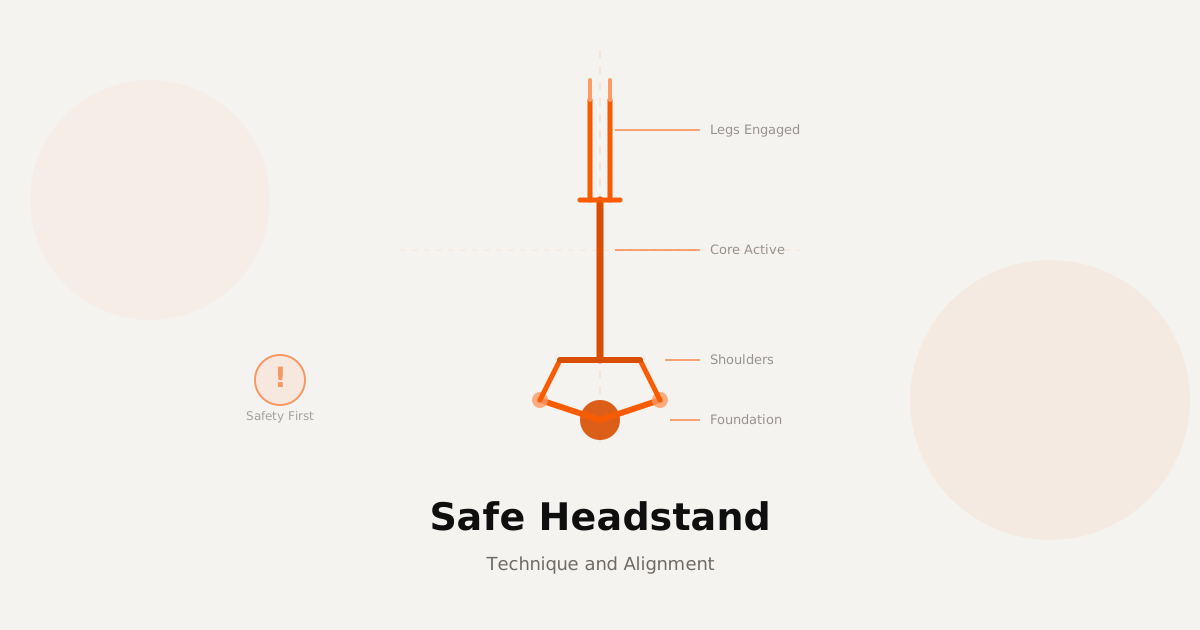
Headstand (Sirsasana) is called "the king of yoga" — and for good reason. The pose strengthens core, shoulders, and balance, improves concentration, and challenges your nervous system. But it's also the pose that causes the most injuries when performed incorrectly.
The foundation is everything
The most important part of a headstand isn't the top — it's the bottom. Your foundation determines everything:
- Forearms: Place forearms parallel, shoulder-width apart. Interlace fingers behind the head.
- Head placement: It's the crown of the head (the flat part at the top) that touches the floor — not the forehead and not the back of the head.
- Shoulder lift: Actively press forearms down and lift shoulders away from ears. 80% of the weight is carried by the forearms, only 20% by the head.
"The key to a good headstand is that the head barely touches the floor. If you're pressing your neck down, you're doing it wrong." — Anna Herceg, Lead Trainer
The three phases
- Phase 1 — Dolphin Pose: Start in Dolphin and hold for 30-60 seconds. If you can do this without discomfort, you're ready for the next phase.
- Phase 2 — Knees to chest: From Dolphin, walk feet close in and lift one knee toward the chest. Switch sides. Build strength and balance.
- Phase 3 — Legs up: Lift both knees toward the chest, slowly extend legs upward. Hold 5-10 seconds. Come down with control.
When you should NOT do a headstand
Headstand isn't for everyone — and that's perfectly fine. Avoid the pose if:
- You have neck injuries or disc problems in the cervical spine
- You have uncontrolled high blood pressure
- You have eye conditions such as glaucoma
- You are pregnant (unless you have an established practice and your doctor approves)
Learn it properly
Headstand is a pose that should be learned with an experienced teacher — not from a YouTube video. Our Inversions Course dedicates entire workshops to safe headstands with hands-on guidance and individual adjustments.
