

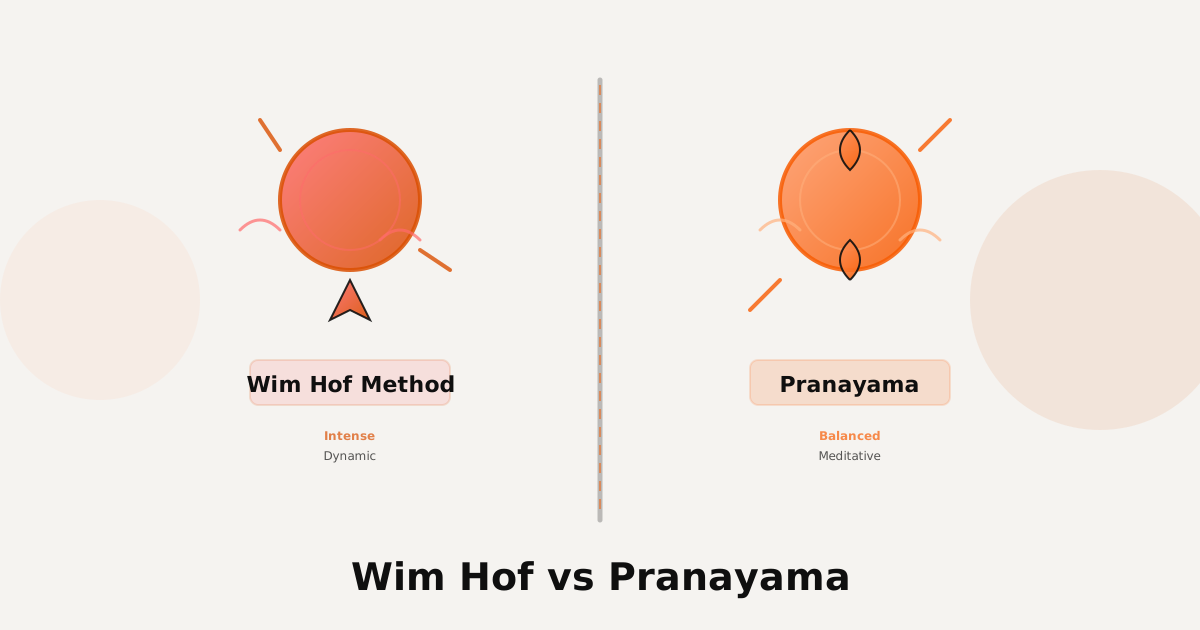
The Wim Hof Method and pranayama are not two names for the same practice. The Wim Hof Method is a particular approach combining breathing, cold exposure and mindset. Pranayama is a broader term for yogic breathing practices. Their overlap makes comparison useful, but does not make them interchangeable.
This guide helps you choose instruction. It is not a tutorial in forceful breathing, long breath holds or cold exposure.
What exactly are we comparing?
The Wim Hof Method's official description presents three pillars: breathing, cold therapy and commitment. Pranayama includes different techniques and teaching traditions. Quiet observation of breathing and an advanced retention practice should therefore not be treated as one uniform activity.
When researching a course, ask for the name of the specific technique. Find out how it is introduced, what preparation is expected and whether you can choose a simpler practice. A general label such as “breathwork” does not answer those questions.
| Question | Wim Hof Method | Pranayama instruction |
|---|---|---|
| What is the framework? | A named method with several components | Breathing practice within a yogic framework |
| Is cold exposure included? | It is one of the method's pillars | Not necessarily; check the individual course |
| Are all sessions alike? | Format and instruction may vary | Techniques and intensity may differ considerably |
| What should I ask? | Teacher qualifications, screening and safety | Technique, progression, adaptations and prerequisites |
What does research tell us?
A 2024 systematic review brought together nine publications covering eight trials of the Wim Hof Method. Findings differed across the outcomes examined, and the authors called for further research. That does not justify promising that a particular session will strengthen your immune system or treat a disease.
The presence of breathing exercises also does not make research about one method apply automatically to every form of pranayama. The technique, participants and setting must fit the claim being evaluated.
Safety before intensity
The official Wim Hof breathing instructions warn about fainting and state that the exercises must never be practised in or near water or while driving. An ordinary yoga class is not a shortcut to teaching yourself intense breathing techniques.
A useful choice starts with understanding the practice and its setting, rather than seeking the strongest sensation.
If you have health questions, discuss the specific practice with a healthcare professional and the teacher. Stop if you feel unwell. You should be able to opt out without pressure to extend a hold or increase intensity.
Frequently asked questions
Is the Wim Hof Method a form of pranayama?
There is overlap in working with breath, but the terms describe different frameworks. Comparing particular techniques is more precise than treating the entire method and the whole pranayama tradition as identical.
Does breathwork have to feel intense?
No. Intensity is not, by itself, a measure of quality. Tell the teacher what you are looking for, and ask for an introduction that leaves room for ordinary, unforced breathing.
What does Yoga Bible offer?
Yoga Bible's 200-hour training includes pranayama within a wider yoga curriculum. It is not a Wim Hof instructor qualification. See our curriculum guide for the broader context.
Choose your next step
For an introduction to yoga, start with the class schedule. To study breath alongside philosophy, anatomy and teaching, explore the training curriculum.
