


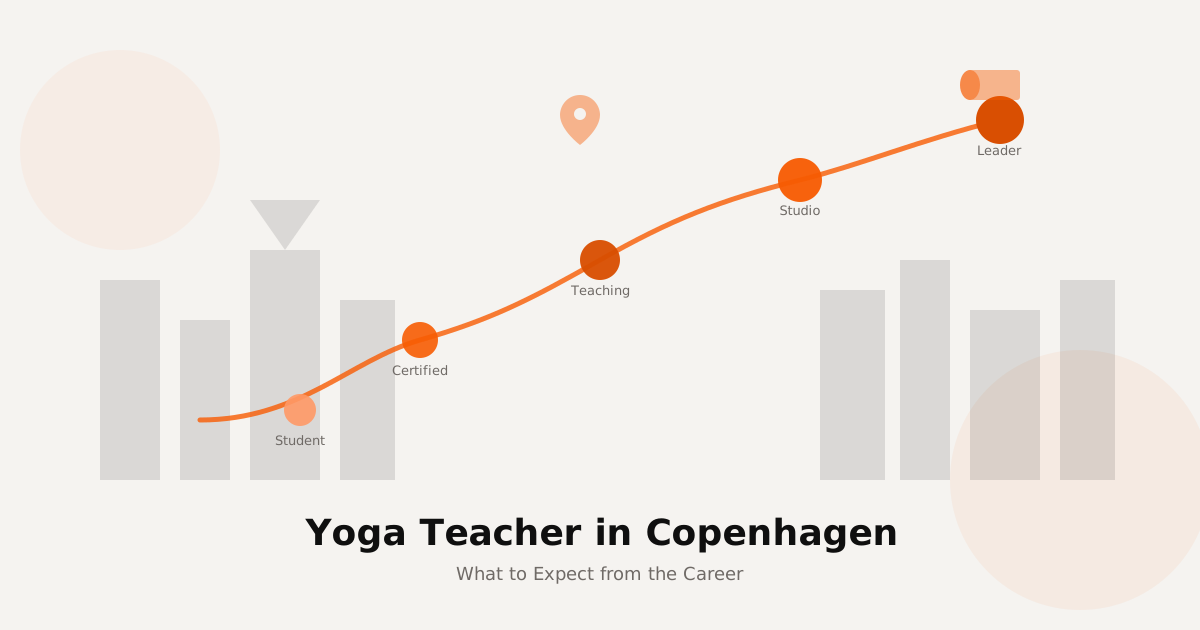
Your first yoga teaching job in Copenhagen is unlikely to begin with a full weekly timetable. A more useful first goal is to plan, deliver and evaluate one class that a studio actually needs. Build experience in small, visible steps: practice teaching, feedback, cover classes and thoughtful outreach. No training course can guarantee employment or a particular income.
Build experience you can show
Prepare three short class plans with different aims: perhaps an introduction, a gentle evening session and a dynamic flow. For each, record the audience, length, opening and useful variations. Teach them to a small group and ask what participants could actually follow. This gives a studio a clearer picture than a long list of pose names.
Keep observations from a teacher or mentor, and note one specific change after each run-through. If your training includes practice teaching, use it to work on timing, cues and transitions. The 200-hour curriculum guide outlines areas to examine before approaching studios.
Contact studios with a clear proposal
First investigate a studio's current classes, location and teacher requirements. Send a short note with your training, the type of class you can lead, your availability and a specific offer to meet or teach an audition. Ask how cover teachers are selected. Avoid sending one vague message everywhere, and do not claim credentials you do not hold.
For an audition, prepare 15 minutes that show more than your favourite poses. Check the room and time limit. Open with a clear frame, offer at least one meaningful option and finish on time. Practise saying the instructions aloud while demonstrating less yourself. This is a general rehearsal exercise, not a claim about any particular Copenhagen studio's process.
Learn from the audition
Ask two questions afterwards: What worked for this group of students, and what change would make the class easier to follow? Write down the answers the same day. If you are not offered the work, the feedback can still improve your next attempt. A refusal alone does not define your teaching; timetable needs and class fit may also matter.
Yoga Bible's mentorship offering describes one-to-one work on cues, voice and sequencing, with observation or video feedback available. It may be useful if you want to rehearse an audition or develop a specific aspect of your teaching. Read the part-time teaching guide before committing to more regular classes than your week can support.
A first teaching opportunity is easier to pursue when you can show one considered class and explain what you changed after feedback.
If you secure cover work, ask who will explain the group and class arrangements, and whom to contact if a practical issue arises. Prepare a short plan you can adapt to those who attend. Afterwards, a professional follow-up can record what you noticed and what you would change.
Frequently asked questions
Should I wait until I have taught for years?
No, but describe the experience you actually have and seek work that matches it. Cover teaching may have different requirements from a permanent specialist class.
What belongs in my first email?
Keep it concise: relevant training, class style, availability, one class idea and one clear next step. Tailor it to the studio.
Will Yoga Bible find me a job?
There is no job guarantee here. Mentorship can help with teaching skills and audition preparation; each studio makes its own hiring decisions.
Explore Yoga Bible's teacher mentorship and choose one concrete goal for your next class.
